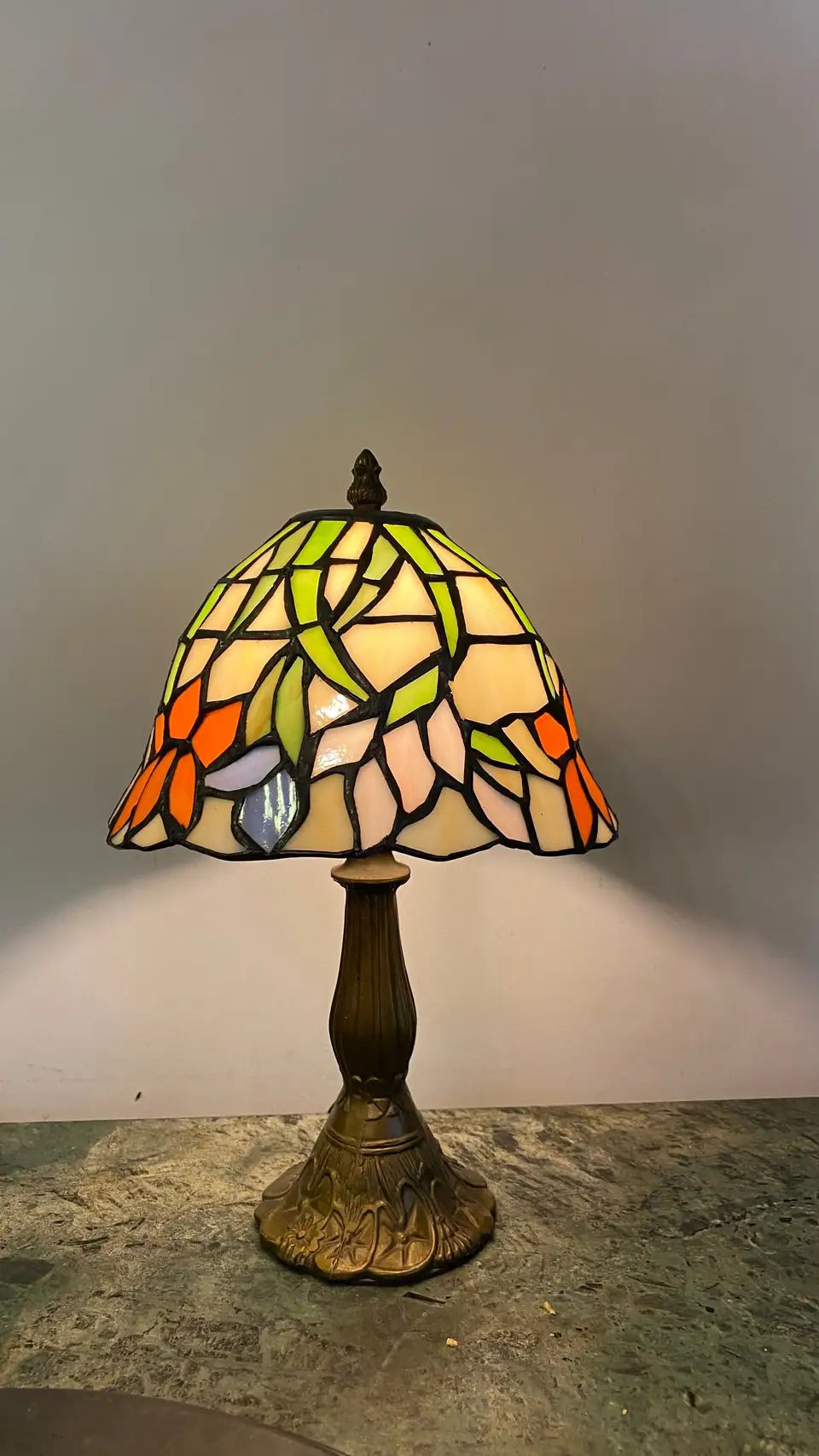
Plate VTiffany-style and leaded glassIdentification
Real Tiffany Studios Lamp or Tiffany-Style? How to Tell
How auction specialists tell a Tiffany Studios lamp from a later Tiffany-style copy: marks, bases, glass, company names and dates, plus what each is worth.
We earn from qualifying purchases through links on this page. How we make money.
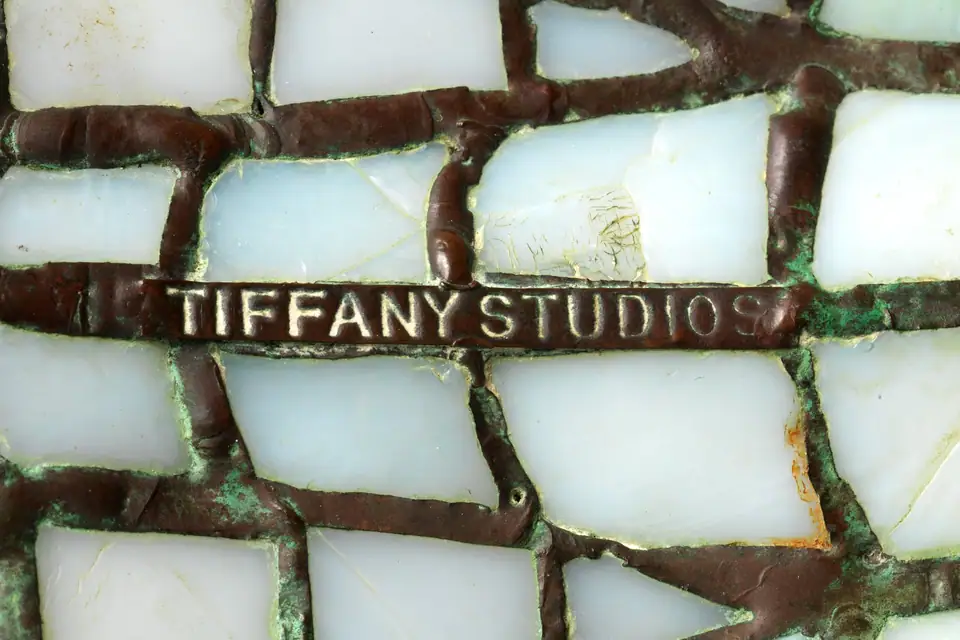
A real Tiffany lamp was made by Tiffany Studios, whose leaded shades date from 1898 into the 1930s; a Tiffany-style lamp is anything later made in the same manner. Marks help but prove nothing: Christie’s warns that a “Tiffany Studios” mark “is no guarantee of originality.” The glass, the leading and the bronze base decide it.
What this page will not do
We cannot authenticate or value your lamp, and no listing on this site claims to be an authentic Tiffany Studios piece. For a lamp you believe is genuine, ask an auction house’s design department or an independent appraiser to examine it.
Where are the marks on a Tiffany Studios lamp?
On both halves. A Sotheby’s catalog entry for a Tiffany Studios “Arrowhead” table lamp of about 1905 records the shade’s small tag and the base each impressed “TIFFANY STUDIOS / NEW YORK”, and the oil canister inside the base impressed with the same words and the model number 225. The Metropolitan Museum’s photograph of its “Lotus, Pagoda” lamp shows the words stamped into the metal rim of the shade.
The company’s name is a dating clue in itself. The Delaware Art Museum lists the firm as the Tiffany Glass and Decorating Company from 1892 to 1900 and as Tiffany Studios from 1902 to 1932. It filed for bankruptcy in 1932 and closed in 1938.
| Check | A period Tiffany Studios lamp | A later Tiffany-style lamp |
|---|---|---|
| Mark | Impressed TIFFANY STUDIOS / NEW YORK on shade tag and base (Sotheby’s) | A maker’s own label, no mark, or a copied mark: a mark is “no guarantee” (Christie’s) |
| Shade construction | Glass edged in copper foil and soldered, silver solder lines patinated bronze or gold (Neustadt) | The same copper-foil method; ask the seller which glass was used |
| Base | Mostly bronze from Tiffany’s Queens foundry (Christie’s) | Ask what metal it is; “bronze finish” describes a color, not a material |
| Glass | Each section “carefully selected from the thousands of sheets” (Christie’s) | Varies by maker; the listing should name it |
| Date | 1898 to the 1930s | Christie’s sees more reproductions from the 1970s |
Why does a “Tiffany Studios” mark prove nothing?
Because marks were copied. Christie’s specialists say “there are many fakes out there, of varying degrees of quality,” that “even Tiffany’s rivals made similar designs,” and that reproductions become more common from the 1970s. Their examiners look at “the leading, patina, pattern, casting of the bronze base and, most importantly, the type and quality of the glass.”
For a buyer, that means a stamped base on an online listing is a starting point for questions, not an answer. Ask for photos of the mark, the underside of the base and the inside of the shade, and ask where the lamp has been since it was made.
Antique slag glass and leaded lamps
Live listings, shown by eBay
Opens eBay in a new tab. Check condition, seller feedback and returns.
These are pre-owned period pieces from American makers of the same era. They exclude any listing that calls itself a Tiffany Studios lamp, since we cannot vouch for that claim.
Which other makers made leaded and painted lamps?
Tiffany Studios was one of several American firms. Two appear often in the antiques trade:
- Handel was founded in 1885 in Meriden, Connecticut, by Philip J. Handel and Adolph Eydam, according to Iowa State University’s museum records.
- Pairpoint of New Bedford, Massachusetts, made “puffy” reverse-painted shades. A Skinner catalog entry for one records the shade signed “Pairpoint Corp.” and the base incised with a P inside a diamond.
A lamp by one of these makers is a period antique in its own right, and our antique lamp value guide covers how such pieces are judged.
What is a Tiffany-style lamp?
A leaded-glass lamp made after Tiffany Studios, in its manner. Christie’s sees reproductions multiply from the 1970s, and today’s makers say so openly: Dale Tiffany, for example, says it was founded in 1979 and within two years was focused on “Tiffany-styled lamps and shades”, reproductions of Louis Comfort Tiffany’s designs. The Tiffany-style lamp guide covers sizes, glass and how to shop for one.
Tiffany-style lamps, new and pre-owned
Live listings, shown by eBay
Opens eBay in a new tab. Check condition, seller feedback and returns.
What is a real Tiffany lamp worth?
Prices span thousands to millions, and only an auction result for a comparable lamp is a guide. Christie’s gives two ends of the range: attractive “geometric” leaded lamps from around $5,000, and a Pond Lily table lamp of about 1903 that sold for $3,372,500 on December 13, 2018, a Tiffany Studios record at the time. Semafor reported that a Tiffany magnolia floor lamp sold at Sotheby’s in New York in December 2025 for $4.4 million, a new record for the studio’s lamps.
Condition changes the figure but does not erase it. Christie’s says “you shouldn’t expect perfection” in a lamp 100 years old, and a few cracks are typically acceptable; a fallen shade or missing glass is not. It also says sensitive rewiring does not affect value, while scratched patina or new sockets can lower it. Read the rewiring guide before touching a period lamp.
Who designed Tiffany’s famous lamps?
Many hands. The Dayton Art Institute credits Clara Driscoll, who managed the Women’s Glass Cutting Department at Tiffany Studios, with its Dragonfly lamp of about 1910, and notes she has been credited only since 2007. The Neustadt Collection says each shade passed through the hands of roughly a dozen craftspeople.
For the wider picture of period lighting, start with the art deco lighting guide or compare the eras in art nouveau vs art deco lighting.
Frequently asked questions
How can I tell if my Tiffany lamp is real?
Look for the impressed TIFFANY STUDIOS / NEW YORK mark on the shade and the base, then have a specialist judge the glass, the leading, the patina and the casting. Christie's says a mark is no guarantee of originality, so only an expert examination settles it.
What is the difference between a real Tiffany lamp and a Tiffany-style lamp?
A real one was made by Louis Comfort Tiffany's company, called Tiffany Studios from 1902 to 1932. A Tiffany-style lamp is a later leaded-glass lamp in the same manner, such as the reproductions Dale Tiffany has made since the early 1980s.
Are Tiffany-style lamps worth anything?
They sell as decorative lamps, priced by size, glass and condition. Christie's notes that a genuine Tiffany Studios geometric lamp starts at around $5,000, while its top lamps sell for millions; reproductions sit far below both.
Does rewiring a Tiffany lamp reduce its value?
Not if it is done with care. Christie's says sensitive rewiring does not affect value, but warns that scratching the base's patina or fitting new sockets can lower it.
Who designed the Tiffany dragonfly lamp?
Clara Driscoll, who ran the Women's Glass Cutting Department at Tiffany Studios. The Dayton Art Institute notes she has been credited only since 2007.
Sources
- Collecting guide: 10 things to know about Tiffany lampsChristie's
- Making a Tiffany LampThe Neustadt Collection of Tiffany Glass
- Tiffany Studios (artist biography)Delaware Art Museum
- TIFFANY STUDIOS, "Arrowhead" Table Lamp (lot 232, Dreaming in Glass, 2019)Sotheby's
- "Lotus, Pagoda" lamp, Tiffany Studios, about 1900 to 1915The Metropolitan Museum of Art (via Wikimedia Commons)
- Dragonfly Lamp, Clara DriscollDayton Art Institute
- Christie's Sets Tiffany Studios World Auction Record: $3,372,500Antiques and The Arts Weekly
- Tiffany lamp coveted by Steve Jobs sells for $4.4 millionSemafor
- Handel (maker record)University Museums, Iowa State University
- Pairpoint Puffy Lamp (auction 2342, lot 226)Skinner Auctioneers
- Dale Tiffany: AboutDale Tiffany
Collection: Tiffany-style and leaded glassIntroduction: Art Deco Lighting: How to Recognize and Buy 1920s and 1930s Lamps
Nearby in the catalogue
The whole cataloguePlate I
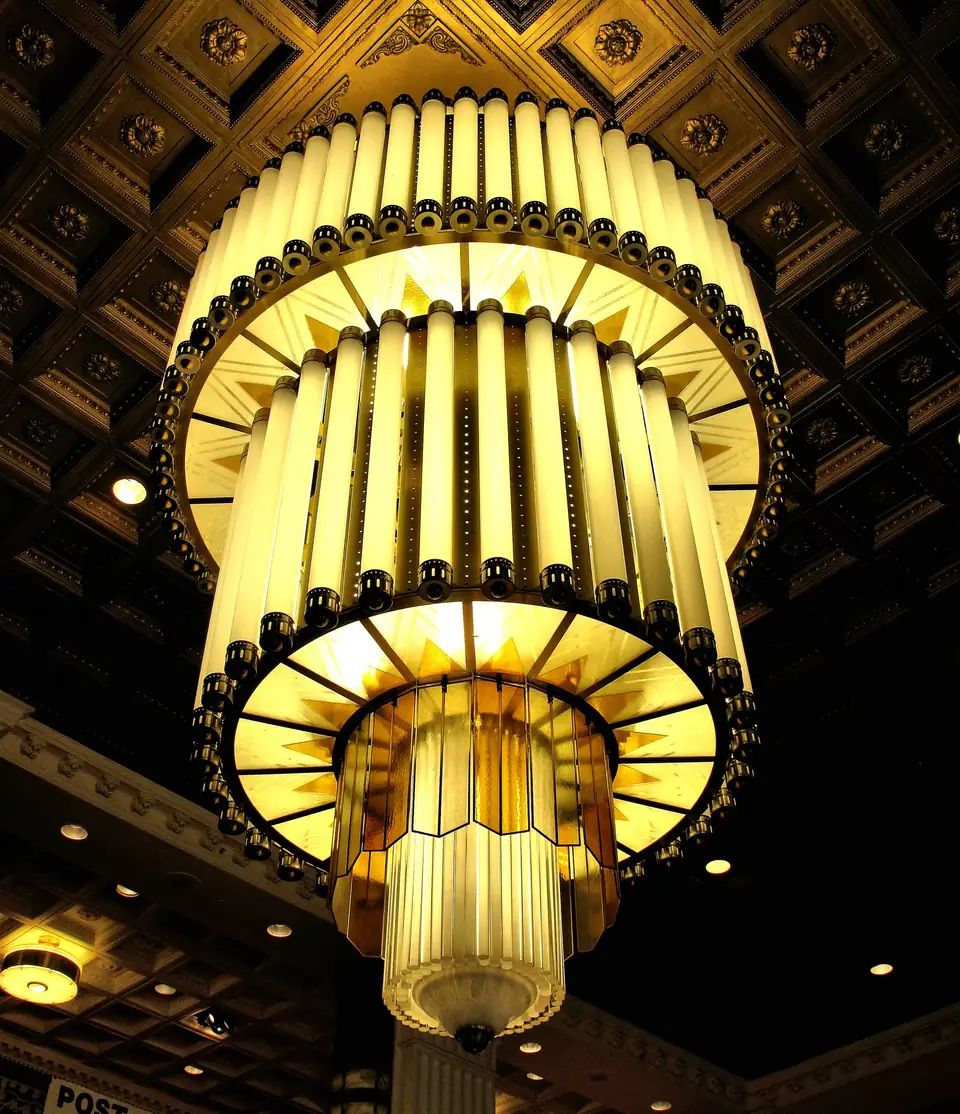
Art Deco Lighting: How to Recognize and Buy 1920s and 1930s Lamps
Photo: Francisco Anzola / Wikimedia Commons, CC BY 2.0Plate IV
Plate IX
Plate XI