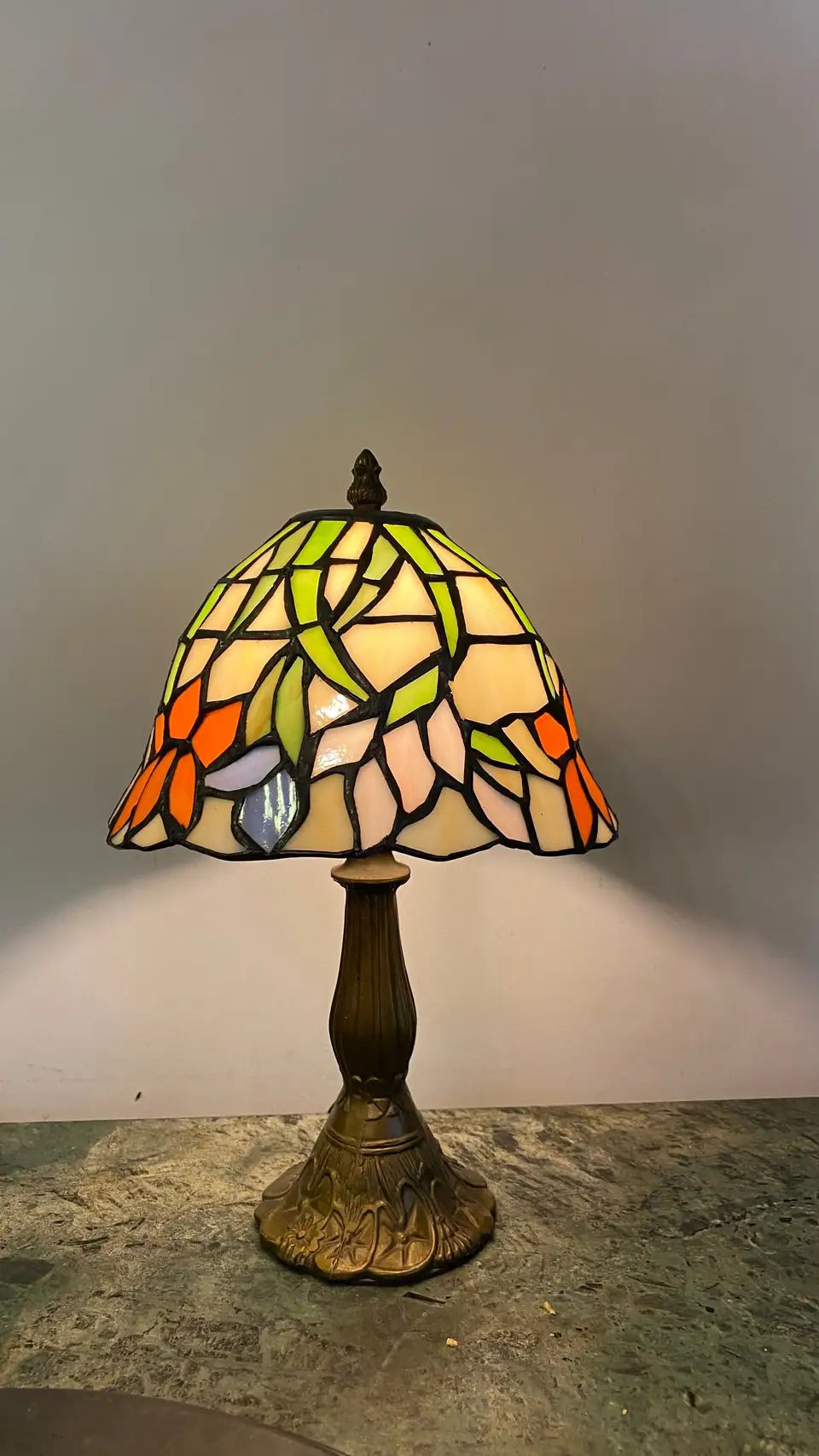
Plate IVTiffany-style and leaded glassSurvey
Tiffany-Style Lamps: Table, Floor and Hanging Lamps, Sizes and Glass
What makes a Tiffany-style lamp, how leaded shades are built, the sizes the originals came in, and how to choose a table, floor or hanging lamp today.
We earn from qualifying purchases through links on this page. How we make money.
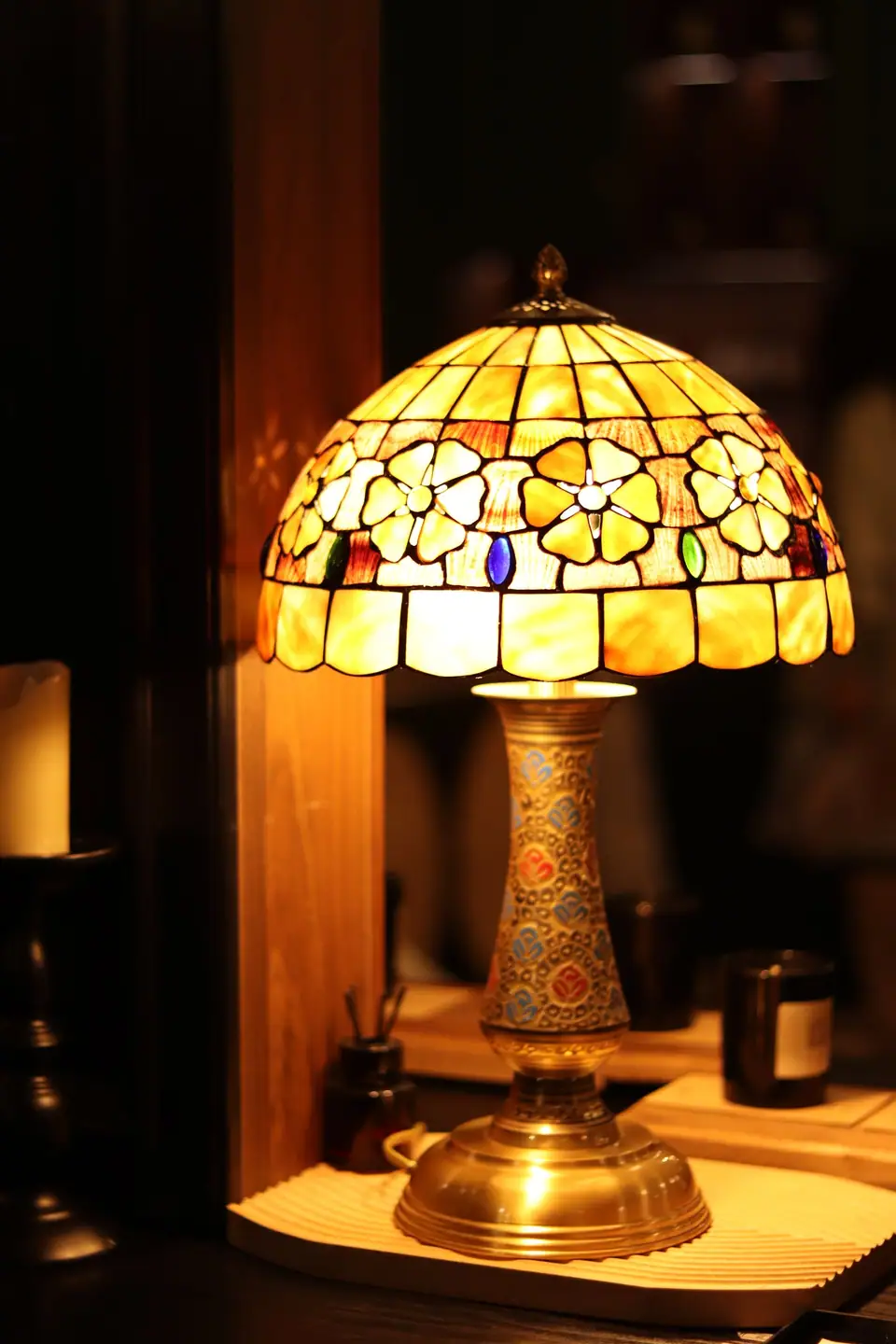
A Tiffany-style lamp has a shade of colored glass pieces edged in copper foil and soldered together, the method Tiffany Studios used, but it was made later or by another maker. Choose one by shade diameter and height first, then glass and base. Tiffany Studios table lamps stood about 21 to 31 inches tall.
What makes a lamp “Tiffany-style”?
The construction. The Neustadt Collection describes how Tiffany’s shades were made: each cut piece of glass was wrapped in thin copper foil, laid on a mold, soldered, then soldered again on the inside, with a brass ring at the bottom edge and a bronze or gold patina on the silver solder lines. Cooper Hewitt credits Tiffany with pioneering this copper-foil technique, which “made possible an entirely new level of detail.”
Older stained-glass windows were built another way. The V&A explains that window makers fitted each piece into “H-shaped strips of lead, called cames,” then soldered the strips together. Copper foil replaced the lead strip with a thin wrap on each piece, which is why Cooper Hewitt links it to the finer detail of Tiffany’s shades.
The name matters for a buyer. Tiffany Studios is the historical company, which used that name from 1902 to 1932. A lamp made in its manner by anyone else is Tiffany-style, and no current maker sells a new “Tiffany” lamp from that studio. Our identification guide explains how specialists tell the two apart.
Before you plug it in
Pre-owned lamps may have old cords and sockets. The CPSC says “a frayed or cracked cord could cause a shock or fire,” and to use bulbs of the correct wattage for the fixture. Have old wiring checked or replaced; the rewiring guide explains what to look for.
What sizes did the originals come in?
Most reproductions follow the proportions of Tiffany Studios lamps, so the originals are a good size guide. These examples come from Christie’s collecting guide, the Metropolitan Museum and the Dayton Art Institute.
| Lamp (source) | Type | Height | Shade diameter |
|---|---|---|---|
| Geometric and Turtle-Back, about 1910 (Christie’s) | Table | 21 3/8 in. | 16 in. |
| Bamboo, about 1910 (Christie’s) | Table | 22 in. | 16 in. |
| Daffodil, about 1910 (Christie’s) | Table | 25 in. | 20 in. |
| Pond Lily, about 1903 (Christie’s) | Table | 26 1/2 in. | 18 in. |
| Dragonfly, about 1910 (Dayton Art Institute) | Table | 27 in. | 20 1/4 in. |
| Laburnum, about 1910 (Christie’s) | Table | 31 1/2 in. | 21 1/2 in. |
| Floor lamp, 1904 to 1915 (the Met) | Floor | 63 in. | 22 in. |
| Nasturtium, about 1905 (Christie’s) | Floor | 63 3/4 in. | 22 1/2 in. |
| Snowball, about 1900 (Christie’s) | Hanging | 48 1/2 in. drop | 25 in. |
A 16 inch shade reads as a reading lamp on a side table. A 20 inch shade and up is a statement piece that needs a wide surface or its own corner. Measure the table’s depth before you buy: the shade should not hang over the edge where it can be knocked.
Table, floor or hanging?
Table lamps are the easiest to place and the easiest to move later. Look at the base as closely as the shade: Christie’s notes that on period lamps “the base can be as important as the shade,” and that some designs always sat on one base, such as the Wisteria on its “Tree” base.
Floor lamps carry the same shade on a tall standard, about 63 inches on the Met’s example. They suit a reading chair and need no table.
Hanging lamps hang from the ceiling like a pendant. Unlike a plug-in lamp, a hardwired hanging lamp is a job for a qualified electrician, and the ceiling box has to be rated for its weight; the chandelier guide covers that rule.
Tiffany-style table, floor and hanging lamps
Live listings, shown by eBay
Opens eBay in a new tab. Check condition, seller feedback and returns.
The listings above mix new reproductions and pre-owned lamps. None claims to be an authentic Tiffany Studios lamp: listings that do are excluded, because a title cannot prove it.
Which patterns are classics?
Most reproductions borrow their patterns from Tiffany Studios designs. The Dayton Art Institute credits the design of its Dragonfly lamp of about 1910 to Clara Driscoll, who ran the Women’s Glass Cutting Department. Christie’s guide names other period designs: Wisteria, Pond Lily, Daffodil, Laburnum and plain geometric shades.
Geometric shades are the plainest and, in period examples, the least expensive: Christie’s puts attractive geometric Tiffany Studios lamps from around $5,000, against millions for the rarest floral designs.
Who makes Tiffany-style lamps today?
Two American companies with long records in the category:
- Dale Tiffany of La Mirada, California, says it was founded in 1979 and within two years focused on “Tiffany-styled lamps and shades,” reproductions of Louis Comfort Tiffany’s designs.
- Meyda Tiffany of Yorkville, New York, began in 1974 as a hobby of Meyer and Ida Cohen, according to a 2014 profile in tED magazine.
When you buy new, the maker’s product page should name the glass and the base metal. For a pre-owned lamp, ask for photos of the underside of the base and any label, and check the shade for cracked or missing pieces before you bid.
Lead in leaded glass
The Virginia Department of Health lists “came and solder used in making stained glass” among sources of lead, and the EPA advises washing your hands before eating or drinking after activities involving lead. Wash your hands after cleaning or handling a leaded shade.
Where does a Tiffany-style lamp fit in a room?
Leaded shades glow in color when lit, so they read best where they are seen from the side: a side table, a desk or beside a reading chair. They pair naturally with period rooms of the early 1900s, and with the schoolhouse and bankers lamps of the same years. For a gift, our lighting gift guide suggests small accent lamps for stained-glass lovers.
Back to the art deco lighting guide.
Frequently asked questions
What does Tiffany-style mean?
A leaded-glass lamp made in the manner of Tiffany Studios but not by it. Tiffany Studios used that name from 1902 to 1932; any lamp made since in its style is Tiffany-style, however well made.
What size Tiffany-style table lamp should I buy?
Match the shade to the room and the table. Period Tiffany Studios table lamps in Christie's collecting guide stand 21 3/8 to 31 1/2 inches tall with shades 16 to 21 1/2 inches across; many reproductions are sold as smaller accent lamps too.
Is the lead in a Tiffany-style lamp a hazard?
The Virginia Department of Health lists the came and solder used in stained glass as a source of lead, and advises washing your hands before eating or drinking after working with lead materials. Dust the shade with a dry cloth and wash your hands afterward.
Who makes Tiffany-style lamps?
Several companies. Dale Tiffany says it has focused on Tiffany-styled lamps and shades since its first years after 1979, and Meyda Tiffany in Yorkville, New York, began in 1974.
Can a Tiffany-style lamp be an antique?
Yes. American makers such as Handel sold leaded and painted lamps in the same decades as Tiffany Studios. Our identification guide covers how to tell them apart.
Sources
- Making a Tiffany LampThe Neustadt Collection of Tiffany Glass
- Grapevine ScreenCooper Hewitt, Smithsonian Design Museum
- Stained glass: an introductionVictoria and Albert Museum
- Collecting guide: 10 things to know about Tiffany lampsChristie's
- Floor Lamp, Louis C. Tiffany, 1904 to 1915The Metropolitan Museum of Art
- Dragonfly Lamp, Clara DriscollDayton Art Institute
- Dale Tiffany: AboutDale Tiffany
- Meyda Tiffany Lighting Celebrates 40th AnniversarytED magazine
- Information for Adults (Lead Safe)Virginia Department of Health
- Reduce the Risk of Lead Exposure at HomeU.S. Environmental Protection Agency
- CPSC and NESF Urge Consumers to "Plug Into Electrical Safety"U.S. Consumer Product Safety Commission
Collection: Tiffany-style and leaded glassIntroduction: Art Deco Lighting: How to Recognize and Buy 1920s and 1930s Lamps
Nearby in the catalogue
The whole cataloguePlate I
Art Deco Lighting: How to Recognize and Buy 1920s and 1930s Lamps
Photo: Francisco Anzola / Wikimedia Commons, CC BY 2.0Plate V
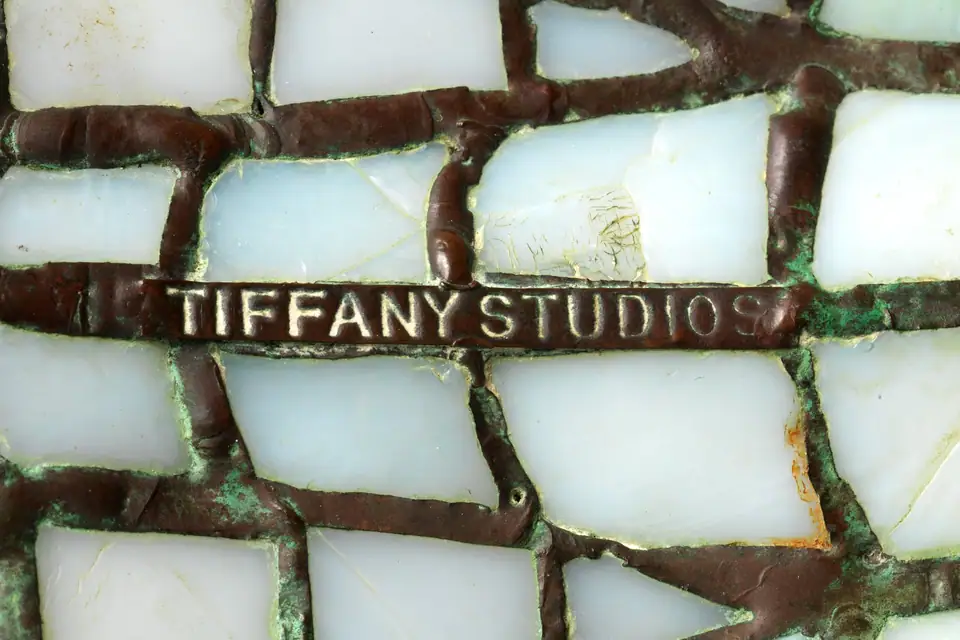
Plate IX
Plate XI