Plate IArt decoIntroduction
Art Deco Lighting: How to Recognize and Buy 1920s and 1930s Lamps
What art deco lighting is, five checks for a period piece, where each fixture fits in a room, and guides to lamps, chandeliers, leaded glass and wiring.
We earn from qualifying purchases through links on this page. How we make money.
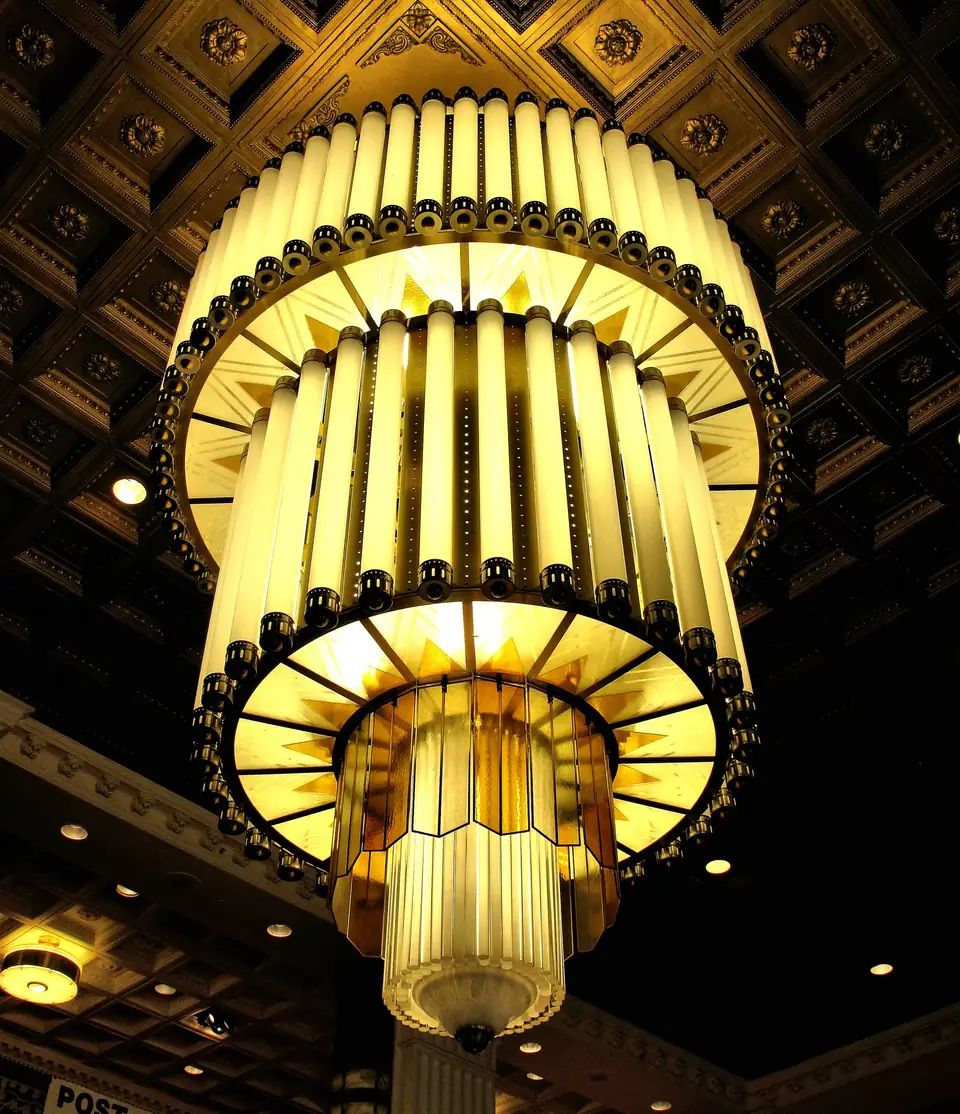
Art deco lighting is the lamps and fixtures of the 1920s and 1930s: geometric shapes, sunbursts and machine-age materials such as chrome, silvered brass, bronze and frosted or etched glass. Period pieces carry a maker and a date; reproductions offer the look with new wiring. This guide shows how to tell them apart and where each fits.
What is art deco lighting?
The lighting of a design movement. The V&A describes art deco as “spanning the boom of the roaring 1920s through to the bust of the Depression-ridden 1930s,” and as “playful, luxurious, exotic, geometric, modern.” Cooper Hewitt notes that the 1925 Paris exhibition of decorative and industrial arts “established Paris as the city to sell the new design and aesthetic of Art Deco.”
Lamps show the style clearly because their materials were new. Museum records list gilt bronze and alabaster on Ruhlmann’s lamp of about 1926 (the Met), chrome-plated metal on Donald Deskey’s of 1927 (the Met), silvered brass on Walter von Nessen’s of 1928 (the Met), and etched glass with patinated bronze on Edgar Brandt’s lamps shown in Paris in 1925 (National Gallery of Victoria). In the 1930s the style turned toward Streamline Moderne, which Cooper Hewitt says emphasized “speed and motion.”
How do you recognize a period piece? Five checks
- The design is geometric. Straight lines, fans and sunbursts, not flowers and vines. The Art Story points to the sunburst crowns of the Chrysler Building as a signature American deco motif.
- The materials fit the period. Chrome, nickel, silvered or gilt metal, patinated bronze, alabaster, frosted, molded or etched glass.
- There is a mark, or a reason there is none. Frankart figural lamps of about 1930, for example, carry molded marks such as “Frankart Inc. Pat. Appld. For,” according to a Skinner auction entry.
- The wear matches the age. Patina in the recesses and wear where hands touch; a pristine finish on a “1920s” lamp deserves a question.
- The wiring tells a story. An original cord points to age and to a lamp that needs rewiring; a new cord points to a repair. Either way, read the safety note below.
Before you plug it in
Vintage lamps and fixtures often have old cords and sockets. The CPSC warns that “a frayed or cracked cord could cause a shock or fire,” and to check that every bulb is the correct wattage for its fixture. Have old wiring checked or replaced, and use a qualified electrician for chandeliers and sconces. EC&M explains that a standard ceiling box must carry a fixture of at least 50 pounds; heavier ones need their own support.
Where does each fixture fit in a room?
| Fixture | Best place | Guide |
|---|---|---|
| Table or desk lamp | Side table, desk, sideboard | Table and floor lamps |
| Torchiere | Room corners, lighting the ceiling | Table and floor lamps |
| Chandelier or pendant | Dining room, entry, living room center | Chandeliers and sconces |
| Wall sconces | Hallways, beside a mirror or bed | Chandeliers and sconces |
| Leaded glass lamp | Reading chair, side table | Tiffany-style lamps |
| Bankers lamp | Desk, study | Schoolhouse and bankers lamps |
Art deco lamps
Table, desk and floor lamps are the easiest way into the style: they plug in, move with you and need no installation. Torchieres throw light at the ceiling; figural lamps such as Frankart’s set a sculpted figure beside the shade; desk lamps like Deskey’s bring chrome to a work surface. Our table and floor lamp guide sets the museum benchmarks side by side.
Art deco table, desk and floor lamps
Live listings, shown by eBay
Opens eBay in a new tab. Check condition, seller feedback and returns.
Listings mix period lamps and new ones in the style. A date and a maker in the listing point to a period piece; “art deco style” points to a reproduction.
Art deco chandeliers and ceiling lights
A deco chandelier or flush mount is the biggest statement in a room and the most demanding purchase. Check that nothing is missing. Weigh it. Then plan the installation with an electrician, who will confirm the ceiling box can carry it. The chandelier and sconce guide covers what to check on a vintage fixture and the bathroom rules for vanity lights.
Art deco chandeliers and ceiling lights
Live listings, shown by eBay
Opens eBay in a new tab. Check condition, seller feedback and returns.
Art deco wall sconces
Sconces bring the style to a hallway or flank a mirror without a ceiling box. If you want a matched pair, buy them together: finding a partner for a single sconce later can be hard. Check each for its glass, its backplate and, for a bathroom, a damp-location marking. Like chandeliers, they are hardwired, so budget for an electrician.
Art deco wall sconces
Live listings, shown by eBay
Opens eBay in a new tab. Check condition, seller feedback and returns.
Tiffany-style and leaded glass
Leaded glass came first: Tiffany’s studios introduced leaded shades in 1898, a generation before deco. Buyers meet it constantly beside deco pieces. Start with Tiffany-style lamps for sizes and glass, and read real Tiffany Studios or Tiffany-style before paying a period price.
The eras around art deco
Art deco sits between art nouveau and mid-century modern, and many listings blur the three. Art nouveau vs art deco lighting sets out the dates and shapes, and adds the Bauhaus and brutalist pieces. Schoolhouse and bankers lamps covers the early 1900s designs still made today, and mid-century modern lighting the Sputnik, arc and Bubble lamps that followed.
Value, care and wiring
Two guides cover what every old lamp raises. Antique and vintage lamps explains marks and makers, and what adds value. Rewiring an antique lamp covers the signs of unsafe wiring, what a kit contains, when to call a pro, and bulbs.
Gifts, and a deco bar corner
Our lighting gift guide matches lamps to people, from the reader to the old-house restorer. For the rest of a deco room, our sister site covers vintage cocktail shakers, including deco designs, for a bar corner lit by a period lamp.
Frequently asked questions
What is art deco lighting?
Lamps and fixtures in the art deco style of the 1920s and 1930s: geometric shapes and machine-age materials such as chrome, silvered brass, bronze and frosted or etched glass. The 1925 Paris exhibition of decorative and industrial arts was its great showcase.
How can I tell if a lamp is real art deco?
Check five things: a geometric design, period materials, a maker's mark, wear consistent with age, and old wiring or signs of rewiring. A listing that says "art deco style" usually describes a newer lamp.
Is art deco lighting still made?
Yes, as reproductions and as licensed reissues of some designs. New lamps in the style suit anyone who wants the look with modern wiring; period pieces suit collectors.
What is the difference between art deco and art nouveau lamps?
Art nouveau, from the early 1890s to the First World War, imitates nature with flowers and curving lines. Art deco is geometric. Our eras guide compares them with Bauhaus, Streamline and brutalist pieces.
Are vintage art deco lamps safe to use?
After their wiring is checked. The CPSC warns that a frayed or cracked cord could cause a shock or fire. Plan on a new cord and socket for any lamp with its original wiring, and use a qualified electrician for hardwired fixtures.
Sources
- Art DecoVictoria and Albert Museum
- Shopping for Art Deco in an Art Deco ParisCooper Hewitt, Smithsonian Design Museum
- Art Deco movement overviewThe Art Story
- Temptation, standard lamp (La Tentation, torchère)National Gallery of Victoria
- Table Lamp, Donald Deskey, 1927The Metropolitan Museum of Art
- Table Lamp, Walter von Nessen, 1928The Metropolitan Museum of Art
- Lamp, Jacques-Emile Ruhlmann, about 1926 (Met 1985.430.21ab)The Metropolitan Museum of Art (via Wikimedia Commons)
- Two Frankart Figural Lamps (auction 3325B, lot 311)Skinner Auctioneers
- Appliances Sailing into the American HomeCooper Hewitt, Smithsonian Design Museum
- CPSC and NESF Urge Consumers to "Plug Into Electrical Safety"U.S. Consumer Product Safety Commission
- Making a Tiffany LampThe Neustadt Collection of Tiffany Glass
- A Weighty IssueEC&M
Collection: Art deco
Nearby in the catalogue
The whole cataloguePlate XI
Plate II
Plate III
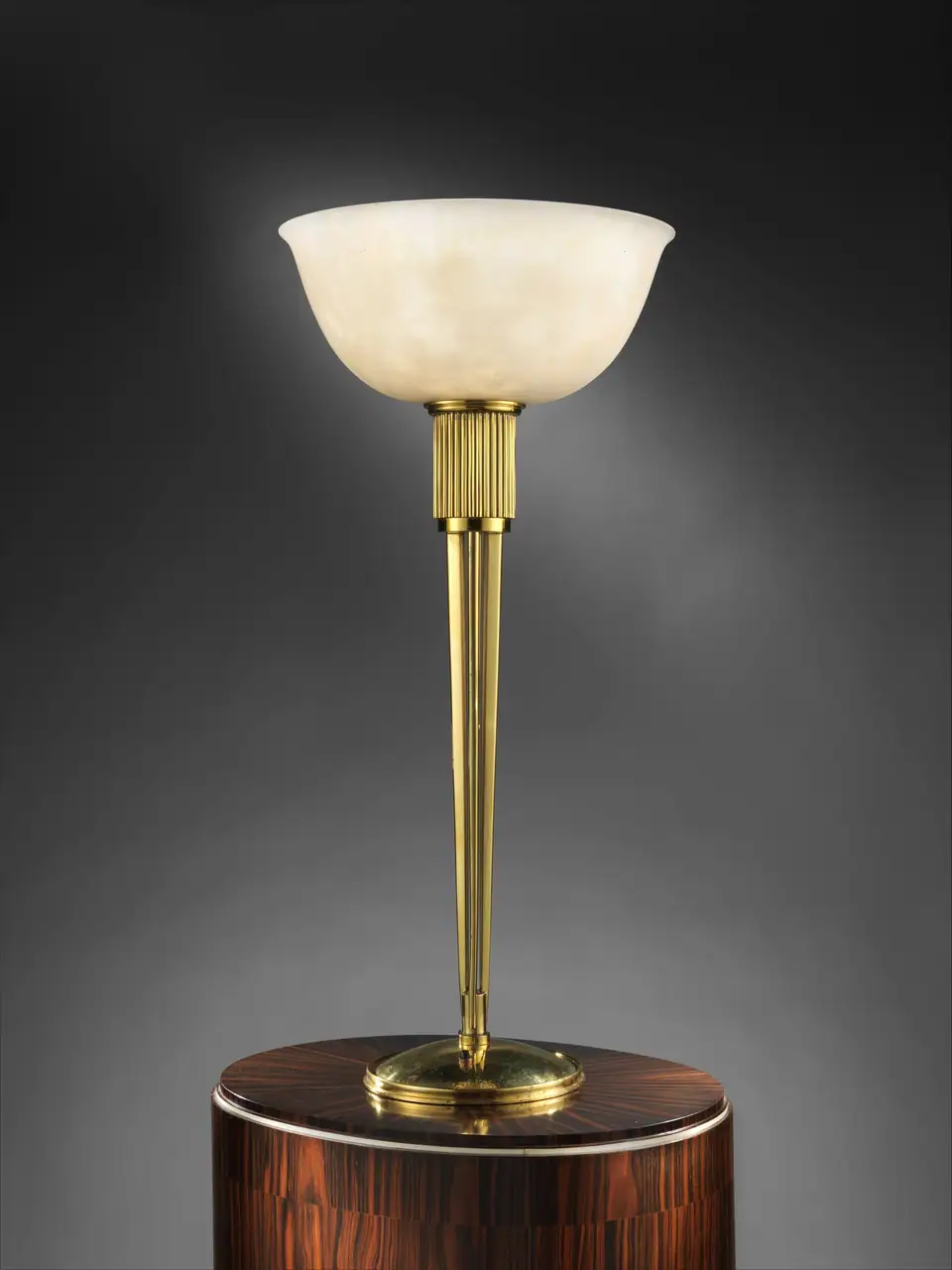
Plate IX